
Why butt and back breakouts happen.
Body acne on the butt, thighs, or back is extremely common—and it doesn’t mean your skin is “dirty.” Most of the time it’s a mix of sweat, friction, clogged pores, and irritated hair follicles. The good news is you can usually calm it down with a simple routine and a few habit changes.
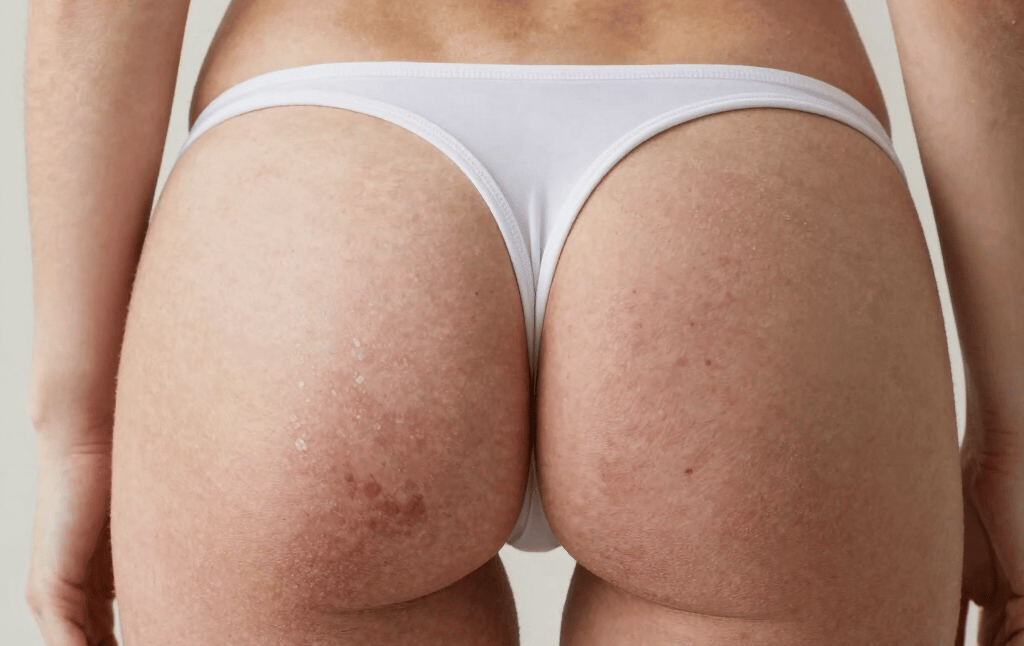
Why butt and back breakouts happen
1) Sweat + tight clothing.
Leggings, shapewear, and sweaty workout clothes trap heat and moisture, which can clog pores and irritate follicles.
2) Friction (chafing).
Skin rubbing (or clothing rubbing) can inflame follicles and create small bumps that look like acne.
3) Product buildup.
Conditioner, body oils, heavy lotions, or fragranced products can sit on the skin and clog pores—especially on the back.
4) Shaving or waxing.
Hair removal can irritate follicles and trigger ingrowns that look like breakouts.
A simple routine that helps (without overdoing it)
Step 1: Shower smart (daily, especially after sweating).
If you work out, try to shower soon after. The longer sweat sits on the skin, the more likely you’ll see bumps.
Step 2: Wash your back last.
If you use conditioner, rinse it out, clip your hair up, and wash your back afterwards. This helps reduce residue that can clog pores.
Step 3: Gentle exfoliation (2–3x per week).
Exfoliating helps remove dead skin that traps oil and hair. Keep it gentle—harsh scrubbing can make bumps angrier and more inflamed.
Step 4: Moisturise, but keep it light.
Dry skin can get irritated and bumpy, but heavy, oily products can clog pores. Choose a lightweight moisturiser and focus on comfort, not “greasy glow.”
Habits that make the biggest difference
Change out of sweaty clothes ASAP (even if you can’t shower yet).
Choose breathable fabrics when you can, especially for workouts.
Wash workout clothes regularly and avoid re-wearing them.
Avoid picking—it can lead to darker marks and longer healing.
When to expect results
With consistent habits, many people see improvement in 2–4 weeks. If bumps are painful, spreading, or not improving after a month, a dermatologist can help you find the right treatment.
If you tell me whether your clients’ bumps are more like tiny rough bumps or red, inflamed pimples, I can tailor a quick “what it might be + what to use” version for your next post.